Lean Management

Have The Organization as Lean as Possible.

Lean management is a systematic approach to enhancing organizational efficiency by maximizing customer value while minimizing waste, originating from the Toyota Production System (TPS).

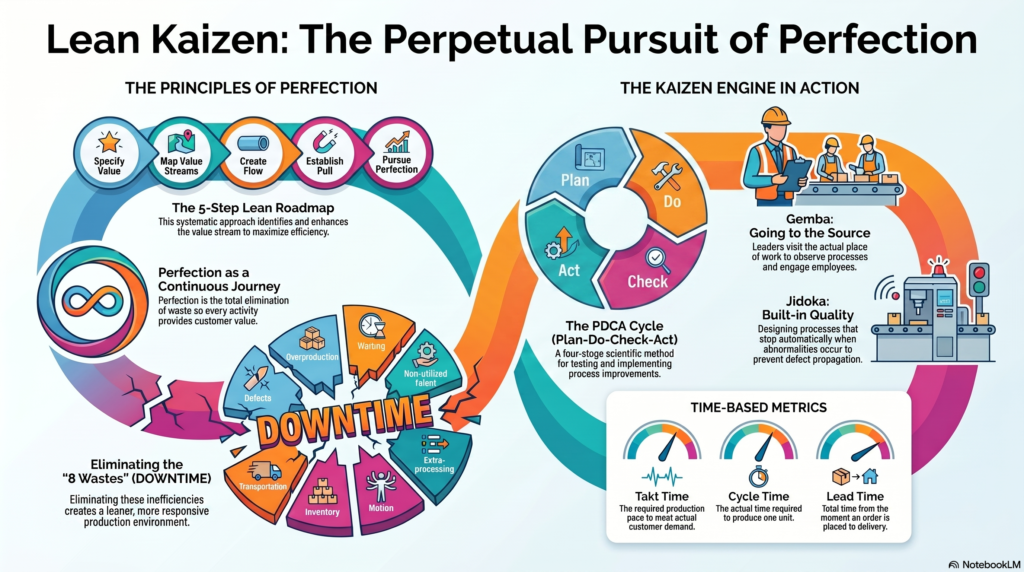
It focuses on continuous improvement (Kaizen), utilize Lean Tools, optimizing processes, and empowering employees to identify problems, resulting in higher quality (Q), lower costs (C), and faster delivery times (T)

Learning Topics

Toyota Production System

TPS was developed by Toyota, particularly by Taiichi Ohno, Sakichi Toyoda, and Kiichiro Toyoda, and has become a global standard for manufacturing excellence.

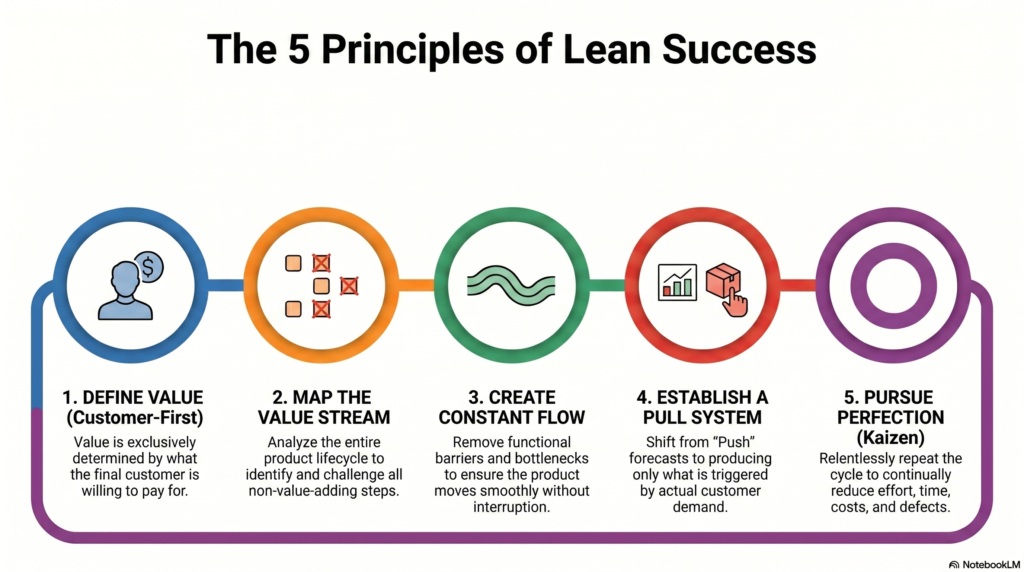
5 Lean Principles

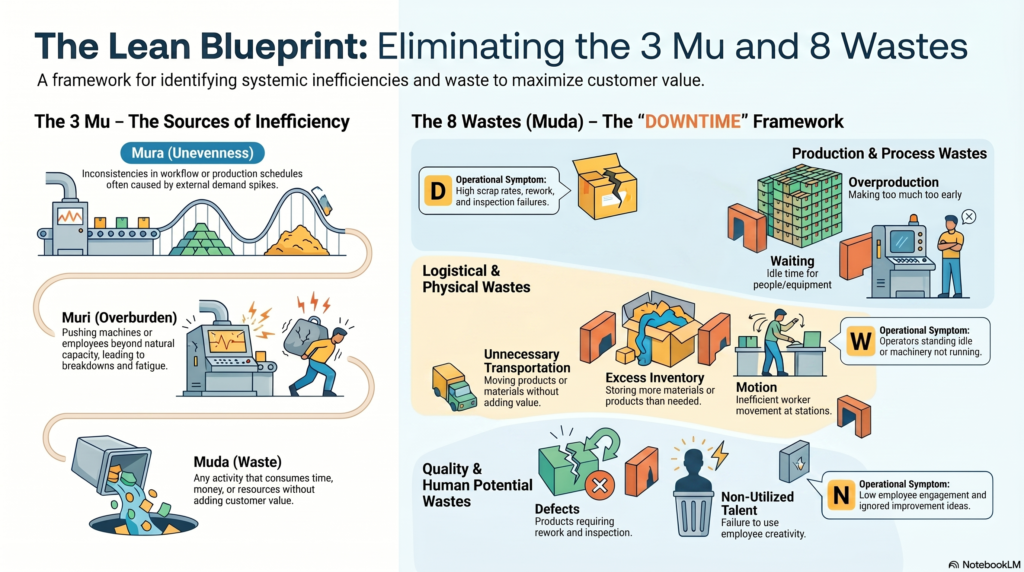
Lean management is an analytical framework and production philosophy designed to maximize productivity by identifying and eliminating waste—defined as any activity that does not add value for which a customer is willing to pay.

Essential Lean Tools

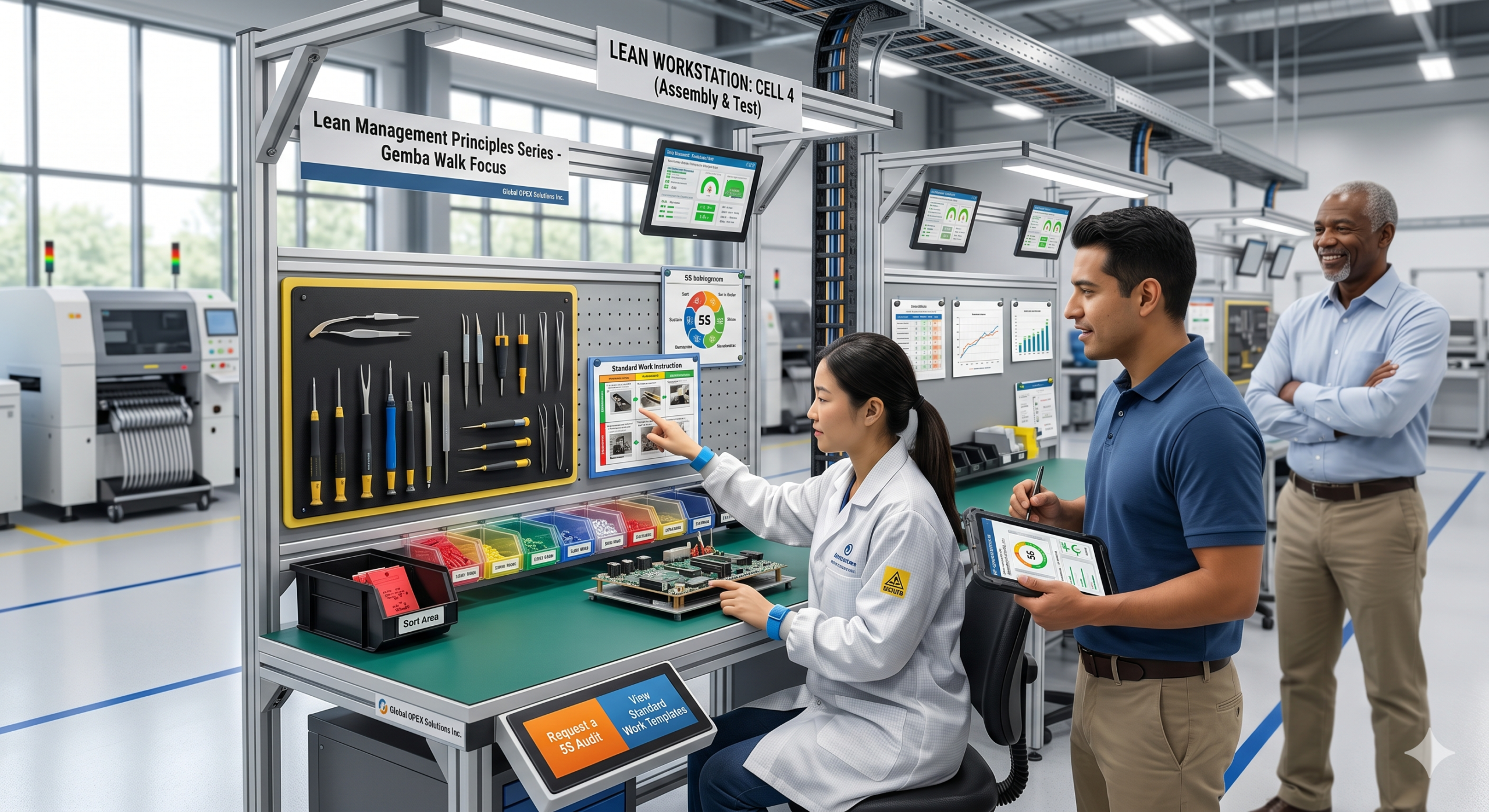
Deep dive into advanced Lean tools with simulation exercises and practical application projects on the shop floor. Tailored content for specific industry challenges (e.g., high-mix, low-volume in electronics; complex assembly in automotive; mold changeover optimization in plastics, and more).

Lean Six Sigma

By systematically fusing the waste-reduction and flow-optimization principles of Lean manufacturing with the rigorous, data-driven, variance-reduction techniques of Six Sigma, organizations can simultaneously achieve unprecedented levels of speed, efficiency, and quality.

OpEx Excellence: Lean Principles, Tools & Implementation

Operation Excellence

Have your organization as Lean as possible

Research Overview & Methodology

This briefing translates Lean manufacturing concepts into universal operational excellence strategies applicable across manufacturing and service sectors. It synthesizes canonical texts, academic research, and standard industry guidelines to provide a factual, robust framework for organizational transformation.

📑 Executive Summary

Lean methodology is a systemic approach focused on maximizing customer value while minimizing waste. Originating from the Toyota Production System (TPS), it relies on five core principles: Value, Value Stream, Flow, Pull, and Perfection. Successful implementation requires a shift from tool-based deployment to deep cultural transformation, driven by step-by-step programmatic execution and rigorous employee training.

🔍 Method of Research

Findings are aggregated from authoritative sources including the Lean Enterprise Institute (LEI), the American Society for Quality (ASQ), ISO standards, and foundational academic texts. Commercial bias and proprietary consulting frameworks have been explicitly excluded to maintain objectivity.

Expected Takeaways

  • Comprehend the 5 Lean Principles and empirical impact.
  • Map specific Lean tools to strategic objectives.
  • Acquire a 5-phase step-by-step implementation roadmap.
  • Access a certified 3-day professional training curriculum.

OpEx Intelligence Report © 2026. Data-driven frameworks for operational excellence.


Best Seller "Machine That Change The World"

The classic, nationally bestselling book that first articulated the principles of lean production, with a new foreword and afterword by the authors.
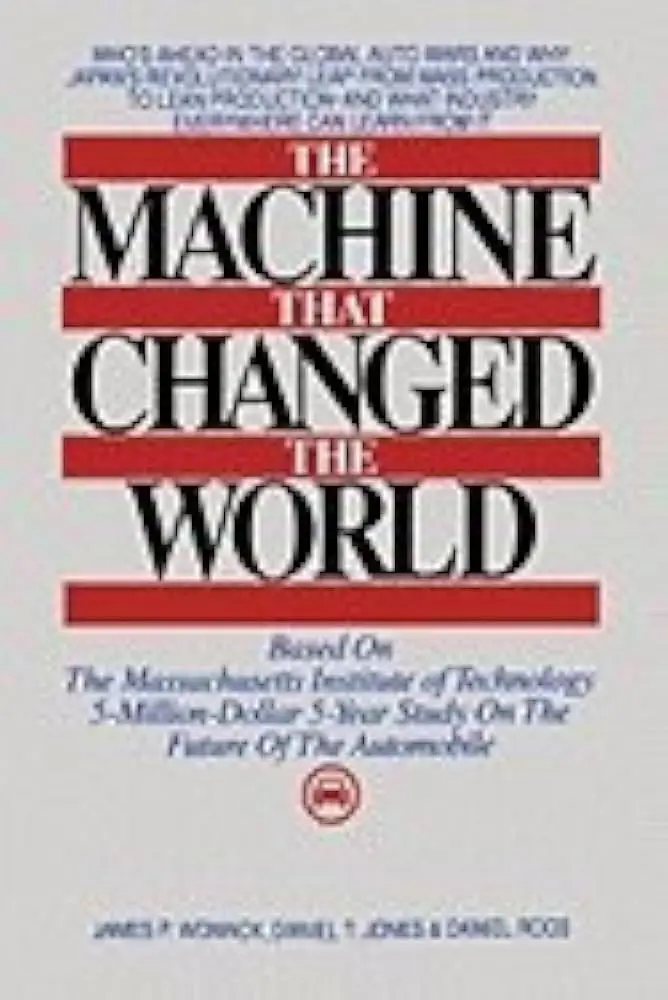
When The Machine That Changed the World was first published in 1990, Toyota was half the size of General Motors.

Twenty years later Toyota passed GM as the world’s largest auto maker. This management classic was the first book to reveal Toyota’s lean production system that is the basis for its enduring success.

Authors Womack, Jones, and Roos provided a comprehensive description of the entire lean system. They exhaustively documented its advantages over the mass production model pioneered by General Motors and predicted that lean production would eventually triumph. Indeed, they argued that it would triumph not just in manufacturing but in every value-creating activity from health care to retail to distribution. 

Lean Thinking
As Lean Thinking clearly demonstrates, these simple ideas can breathe new life into any company in any industry, routinely doubling both productivity and sales while stabilizing employment. But most managers will need guidance on how to make the lean leap in their firm.
Part II provides a step-by-step action plan, based on in-depth studies of fifty lean companies in a wide range of industries across the world -- including Pratt & Whitney, Porsche, and Toyota. Even those readers who believe they have embraced lean thinking will discover in
Part III that another dramatic leap is possible by creating a lean enterprise for each of their product families that tightly links all value-creating activities from concept to product launch, from order to delivery, and from raw materials into the arms of the consumer. 

This new concept takes the best features from the American, German, and Japanese industrial traditions and recombines them in a way that can be applied to every economic activity, from long-distance travel to construction to health care.Lean Thinking does not provide a new management "program" for the one-minute manager. Instead, it offers a new way of thinking, being, and doing for the serious manager -- one that will change the world.

Why Lean is so important to Operation Excellence ?