Digital Transformation

Digital transformation is reshaping the landscape of modern organizations, integrating innovative technologies to drive operational excellence and sustained growth.

At its core, this transformation encompasses the principles of Industry 4.0—where automation, connectivity, and smart systems revolutionize manufacturing and business processes.
By harnessing advanced data analysis, organizations gain actionable insights that inform strategic decisions and foster continuous improvement. 

Additionally, the adoption of artificial intelligence (AI) for operational excellence (OpEx) empowers companies to automate complex tasks, optimize workflows, and predict future trends, ensuring they remain agile and competitive in an increasingly digital world.
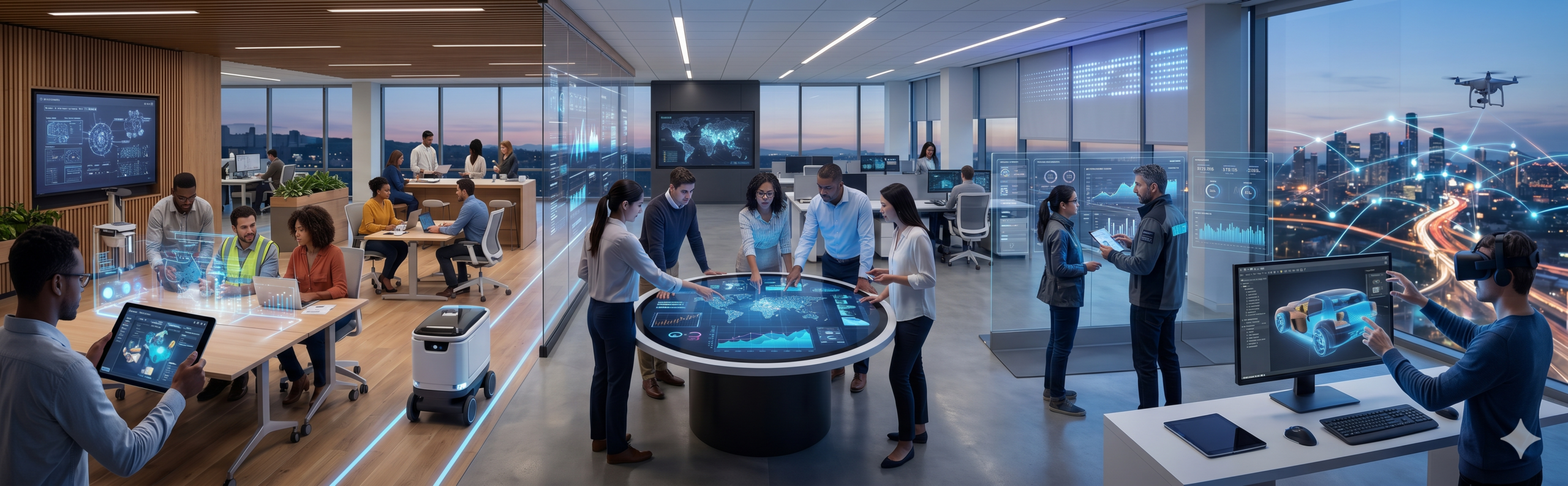
Recommended Participants

  • Maintenance and Equipment Technicians: To support reliable operations and integrate digital monitoring solutions.

  • Line Leaders and Team Leaders: For managing teams, driving compliance, and advancing continuous improvement efforts using digital and AI tools.

  • R&D and Product Development Staff: To design with quality requirements in mind and utilize data analytics for innovation.

  • Internal Auditors: To assess compliance and improvement opportunities through quality system data and AI insights.

  • New Employees in Quality-Related Roles: To build foundational competence in modern quality management systems and analytics-driven practices.

  • Employees from Supporting Departments (logistics, purchasing, warehouse): To align their processes with smart manufacturing and data-driven quality requirements.

  • Managers and Senior Leaders: To champion digital transformation and ensure strategic alignment with operational excellence goals.

Curriculum include

Industry 4.0 and Smart Operation

The fourth industrial revolution is reshaping the manufacturing landscape, merging digital technologies with physical operations to unlock new levels of efficiency, agility, and innovation.

The industry 4.0 and Smart Manufacturing training module is designed to prepare operations leaders and technical teams to harness the power of advanced technologies—such as IoT, AI, big data analytics, and cyber-physical systems—for strategic advantage. 

By integrating smart systems into production environments, organizations can enhance real-time decision-making, optimize resource utilization, and accelerate continuous improvement, positioning themselves at the forefront of operational excellence.

The industrial landscape of 2026 is defined by the "Agentic Turn"—a shift from reactive, prompt-based Generative AI to autonomous, goal-oriented Agentic systems .

Operational Excellence (OpEx) is no longer achieved solely through human-centric process improvement but through the orchestration of a "silicon-based workforce" alongside human expertise. 

This report outlines a comprehensive strategy for AI integration across manufacturing and business functions, providing a modular training curriculum and a multi-phased implementation roadmap. Key findings indicate that while Generative AI improves content creation, Agentic AI drives a 25% increase in delivery accuracy and a 20-30% reduction in operational costs.

The manufacturing sector is currently navigating a pivotal transition from traditional "descriptive" operations to an intelligence-driven ecosystem powered by advanced data analysis.

This strategic shift is no longer optional; organizations adopting AI-native factory orchestration are achieving Overall Equipment Effectiveness (OEE) scores as high as 92%, compared to the industry average of 78%, and reporting an average return on investment (ROI) of 35% within the first year.   

Despite this potential, approximately 70% to 95% of digital transformation projects fail to reach production scale due to the "strategy-execution preparedness gap"—where leadership ambition outpaces technical infrastructure and workforce readiness. This report outlines a structured framework to bridge this gap, focusing on four critical pillars.