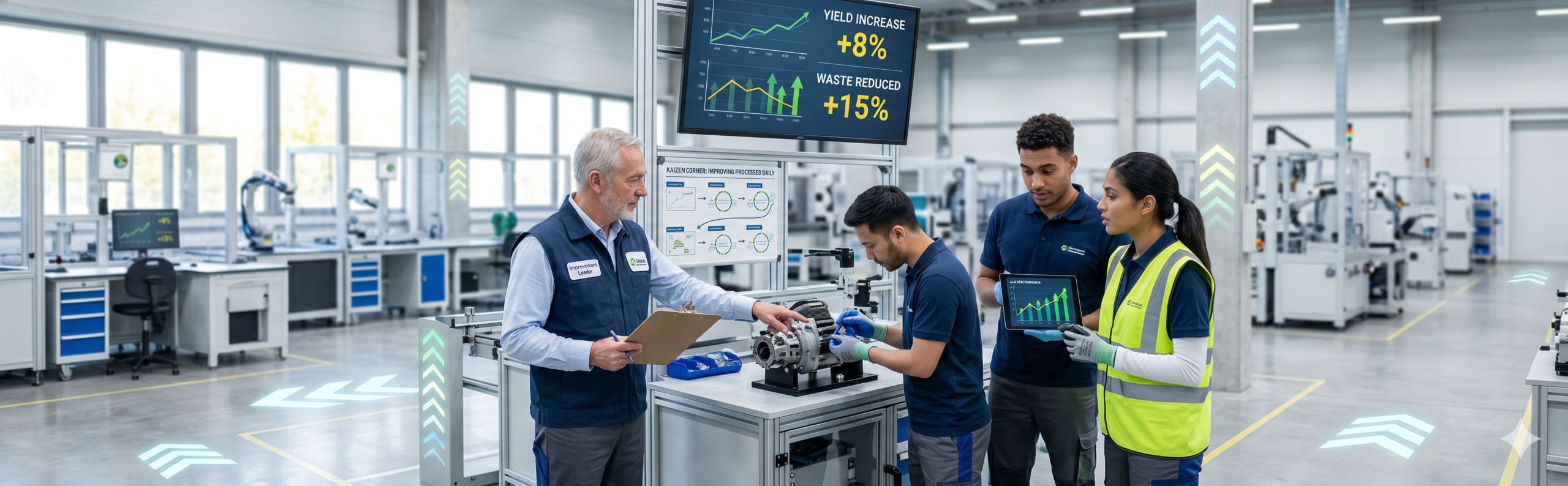
Transform Your Business with Continuous Improvement and Operational Excellence
Discover the frameworks, proven methodologies, and digital platforms driving modern Quality Management.
Why Continuous Improvement Matters
Organizations that pursue Operational Excellence and actively measure the Cost of Quality benefit from reduced waste, optimized process efficiency, and a highly engaged workforce. By investing in prevention and automated appraisal systems, businesses can dramatically reduce the internal and external failure costs that damage profitability and reputation.
In today's fast-paced global market, quality is no longer just a defensive compliance measure—it is an offensive strategy for innovation, market expansion, and customer delight. Operational Excellence is a management philosophy focused on continuously improving processes, reducing waste, and delivering consistent value to customers. Whether you are looking to streamline a manufacturing floor or overhaul enterprise-wide quality systems, sustainable success requires blending the right cultural mindset with cutting-edge digital tools.
"Achieve Operational Excellence"
Continuous Improvement Culture in Operational Excellence
A continuous improvement culture is built by empowering employees to solve real workplace problems, fostering cross-functional collaboration, and developing strong analytical and critical thinking skills.
Through practical training in root cause analysis and data-driven decision-making, participants learn to drive process improvements and implement lasting changes.
This approach not only enhances quality and productivity but also cultivates teamwork and a proactive mindset, essential for sustained operational excellence within organizations.